


Is it a type of bean? A specific dark roast? Or just a tiny, powerful coffee served in a doll-sized cup? If you’ve ever felt a little lost staring at a café menu, you're not alone. The world of espresso can feel intimidating, with its hissing machines, complex terms, and intense flavors. But the truth is, it doesn't have to be complicated. Great coffee should be accessible to everyone, and that starts with understanding what’s in your cup.
We believe that a perfect shot of espresso begins long before the hot water hits the coffee. It starts with the right beans, roasted with care. In this guide, we’ll cut through the noise and get straight to the heart of it. You'll learn exactly what makes this brewing method unique, why its flavor is so concentrated, and most importantly, how to choose fresh, high-quality beans to pull a truly great shot. By the end, you’ll have the confidence to order-or even start making-the perfect espresso at home.
Key Takeaways
- Understand that espresso is a unique brewing method, not a specific type of bean-this opens up your coffee choices.
- Learn the key variables that directly impact the flavor and quality of your espresso shot, from grind size to brew time.
- Discover why freshly roasted beans are the most important ingredient for achieving rich crema and deep, complex flavor.
- Master the simple shot to confidently order or create your favorite café drinks, from lattes to macchiatos.
What Exactly Is Espresso? (Hint: It's a Method, Not a Bean)
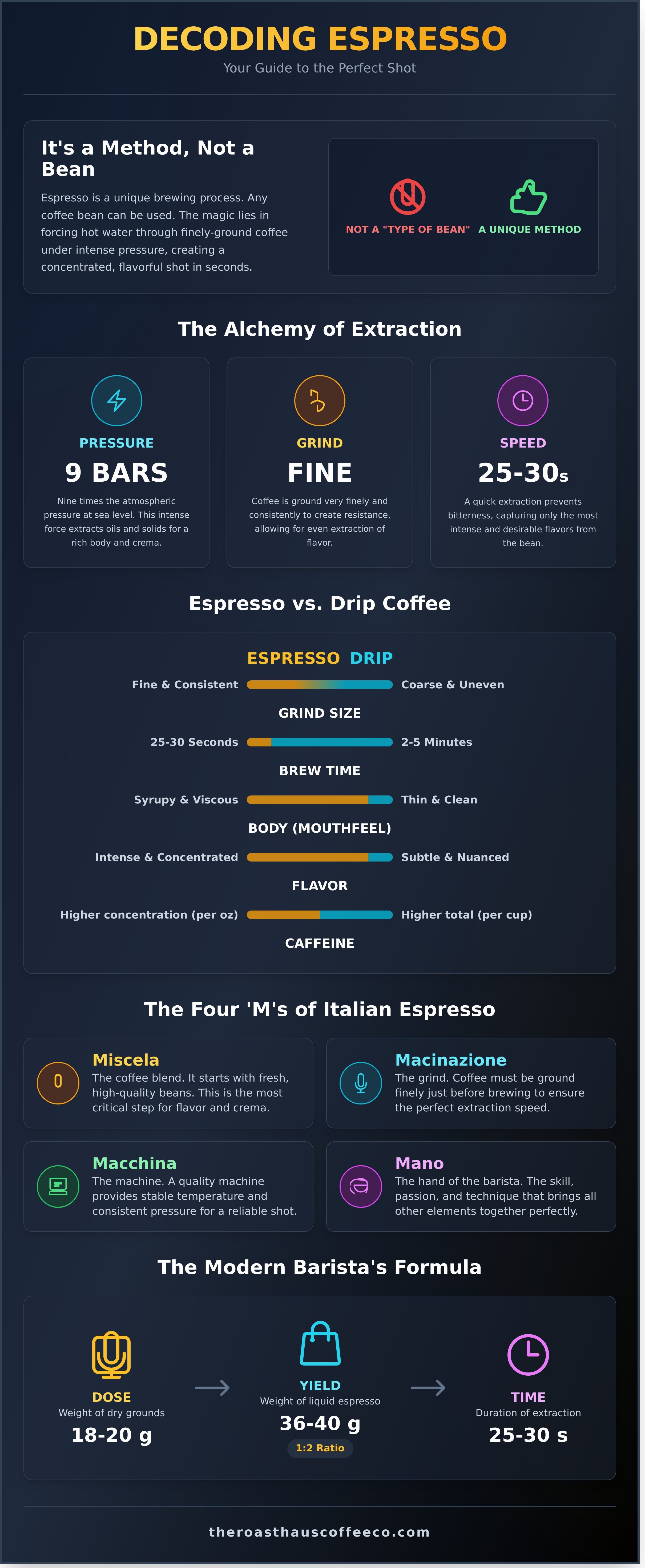
Let's start by clearing up the biggest myth in coffee: there is no such thing as an "espresso bean." Any coffee bean can be used to make it. At its core, the answer to What is espresso is that it's a unique brewing method. It’s a concentrated coffee beverage made by forcing a small amount of nearly boiling water through finely-ground coffee under intense pressure.
This powerful process extracts a deep, complex flavor profile that you can't get from other methods. The result is a small, potent shot of coffee with a syrupy body and a layer of rich crema on top. This single shot is the heart and soul of countless classic coffee drinks, from a latte to a cappuccino.
The Core Definition: Pressure, Grind, and Speed
The magic of this brewing style comes down to three key factors that work together in perfect harmony. Unlike slow-drip or immersion methods that use gravity and time, this method is all about intensity and speed.
- Pressure: A machine forces water through the coffee grounds at an immense pressure-typically 9 bars, or nine times the atmospheric pressure at sea level. This is crucial for extracting oils and solids quickly.
- Grind: The coffee must be ground very finely and consistently. This creates the right amount of resistance for the pressurized water to extract flavor evenly.
- Speed: A perfect shot is pulled in just 25-30 seconds. This speed prevents over-extraction of bitter compounds, capturing only the best, most intense flavors of the bean.
Key Characteristics of a True Espresso Shot
A well-pulled shot is a multi-sensory experience. Look for these four distinct characteristics:
- Crema: The reddish-brown, frothy layer on top. It's an emulsion of coffee oils and carbon dioxide, and a thick, lasting crema is a great sign of fresh beans and a skilled extraction.
- Body: It has a full, viscous mouthfeel. Compared to the thinner consistency of drip coffee, it feels heavier and more syrupy on the palate.
- Flavor: The taste is intense, concentrated, and complex. It highlights the unique notes of the coffee bean, whether they are chocolatey, nutty, fruity, or floral.
- Aroma: The brewing process releases a powerful and immediate fragrance, a key part of the experience.
Espresso vs. Drip Coffee: The Key Differences
While both start with coffee and water, the final products are worlds apart. The brewing method dictates everything from flavor to texture. Drip coffee uses gravity to slowly percolate water through coarse grounds, resulting in a larger, cleaner, and more subtle cup. In contrast, the pressurized method creates a smaller, more intense beverage with a heavier body. Interestingly, while a shot is more concentrated in caffeine per ounce, a standard 8-ounce cup of drip coffee often contains more total caffeine.
The Art of 'Pulling a Shot': Variables That Create Flavor
The term "pulling a shot" is a nod to the classic lever machines, where baristas physically pulled a lever to create the pressure needed for extraction. Today, it describes the entire process of brewing a shot of espresso. Making great coffee is a craft-a careful balance of science and technique where small adjustments can completely change the flavor in your cup. To master this art, we start with the four foundational pillars of Italian coffee tradition.
The Four 'M's of Espresso
For generations, Italian baristas have relied on four key elements, known as the "Four M's," to guide them toward the perfect shot. These principles are just as relevant for the home barista today.
- Miscela (The Coffee Blend): It all begins with the beans. Freshness and quality are everything. Using beans roasted to order ensures you capture peak flavor. While there are many factors in choosing the best coffee beans, starting with a fresh, high-quality blend is the most critical step.
- Macinazione (The Grind): The coffee must be ground to a fine, consistent powder right before brewing. Too coarse, and the shot will be weak; too fine, and it will be bitter.
- Macchina (The Machine): A quality espresso machine provides stable temperature and consistent pressure-two essential ingredients for proper extraction.
- Mano (The Hand): This is the skill and passion of the barista. It's the human touch that brings the other three elements together to create something truly special.
Understanding Dose, Yield, and Time
To achieve consistent results, modern baristas focus on a simple formula. By measuring these three variables, you can fine-tune your recipe and pull a delicious shot every time.
- Dose: The weight of dry coffee grounds in your portafilter. A typical double shot uses 18-20 grams.
- Yield: The weight of the liquid espresso in your cup. A common starting point is a 1:2 brew ratio, meaning an 18-gram dose would produce a 36-gram yield.
- Time: The duration of the extraction, from the moment you start the pump until you reach your target yield. The sweet spot is usually between 25 and 32 seconds.
What Is Crema and Why Does It Matter?
That beautiful, reddish-brown foam on top of your shot is called crema. It’s formed when water is forced through the coffee grounds at high pressure, emulsifying the coffee bean's oils and suspending them in a layer of C02 gas and coffee solids. A healthy crema is a great visual cue-it indicates that your beans are fresh and your extraction was likely successful. However, crema on its own is often quite bitter. Its real value is as an indicator of a well-made shot, not as the primary source of flavor.
Choosing the Best Coffee Beans for Espresso
Let's clear up a common misunderstanding: there is no such thing as an "espresso bean." Any coffee bean from any origin can be used to pull a shot. However, the high-pressure, rapid extraction of espresso acts like a magnifying glass for flavor. This means some coffees perform better than others, and one factor stands above all else: freshness.
The 'Espresso Roast' Myth
You've likely seen bags labeled "Espresso Roast." This is a marketing term, not a type of bean. Historically, it referred to a very dark, oily roast used to mask imperfections and create a consistent, strong, and bitter flavor. While that classic Italian style has its place, modern specialty coffee has shown that a wide spectrum of roast profiles can produce incredible espresso, full of unique and delicate flavors. Don't shop by the label; focus on the flavor notes you enjoy.
Freshness Is Non-Negotiable
Stale coffee makes bad espresso. The brewing process amplifies everything, including the flat, cardboard-like taste of old beans. More importantly, freshly roasted coffee contains trapped CO2, which is essential for producing a rich, stable, and beautiful crema-the signature of a well-pulled shot. Always look for a "roasted on" date on the bag, not a generic "best by" date. For peak flavor, aim to use your beans within 7 to 21 days of their roast date. This is why we roast every single bag to order; it’s the only way to guarantee absolute freshness.
Roast Profile: Light, Medium, or Dark?
The roast level dramatically impacts the final taste in your cup. While personal preference is key, here’s a general guide to help you choose:
- Dark Roasts: The traditional choice. These beans offer low acidity, heavy body, and deep notes of dark chocolate, caramel, and nuts.
- Medium Roasts: A modern favorite for a reason. They provide a beautiful balance of sweetness, acidity, and complexity, with a wider range of fruit and floral notes.
- Light Roasts: For the adventurous. These have bright, vibrant acidity and highlight the bean's origin. They can be challenging to dial in but offer a uniquely rewarding and nuanced shot.
You’ll also see single-origin coffees and blends. Blends are often designed specifically for balance and consistency, combining beans from different origins to create the complex flavor profile desired in many common espresso drinks.
Ultimately, the best coffee for you is the one that tastes best to you. The most important step is starting with impeccably fresh beans. See the difference freshness makes. Explore our artisan-roasted coffees.
A Tour of Common Espresso Drinks
That simple, concentrated shot of coffee is the heart of countless café favorites. Understanding the basic building blocks of these drinks means you can walk up to any counter and order with confidence, getting exactly the cup you crave. Whether you prefer your coffee straight, with milk, or with water, it all begins with a quality espresso shot.
We've broken down the most common drinks into simple categories to help you explore the menu like a pro.
The Pure Shots
These drinks celebrate the unadulterated flavor of the coffee bean itself. The main difference is the amount of water used during extraction, which dramatically changes the taste and texture.
- Solo: A single, 1-ounce shot. The purest expression of the coffee.
- Doppio: A double shot, around 2 ounces. This is the standard base for most drinks in modern coffee shops.
- Ristretto: A "restricted" shot pulled with less water. The result is a more concentrated, sweeter, and intense flavor.
- Lungo: A "long" shot pulled with more water. This creates a larger, less intense drink with a different flavor profile.
Classic Milk-Based Drinks
For many, the perfect coffee is a harmonious blend of coffee and steamed milk. The ratio of milk and foam is what defines these classics.
- Cappuccino: The traditional balance: equal parts espresso, steamed milk, and a thick, airy cap of milk foam.
- Latte: A milk-forward drink. It consists of espresso and a large amount of steamed milk, topped with just a thin layer of foam.
- Flat White: Similar to a latte but made with less milk and a very thin layer of velvety microfoam, creating a stronger coffee flavor.
- Macchiato: Italian for "marked." This is a shot of espresso "marked" with a small dollop of milk foam.
Other Popular Variations
This category includes beloved drinks that mix espresso with water, chocolate, or even ice cream.
- Americano: Espresso shots combined with hot water, creating a drink with a strength similar to drip coffee but with the distinct flavor of an espresso pull.
- Cortado: A balanced drink of equal parts espresso and lightly steamed milk, served in a small glass to "cut" the intensity of the coffee.
- Mocha: A perfect treat for chocolate lovers. It’s a latte with added chocolate syrup or cocoa powder.
- Affogato: A simple, elegant dessert where a scoop of vanilla ice cream is "drowned" in a freshly pulled shot of hot espresso.
No matter which drink you choose, its quality begins with the bean. A truly remarkable coffee experience starts with a foundation of freshly roasted beans from a roaster you trust. Explore your options at The Roast Haus Coffee Co.
Your Espresso Journey Starts Now
You've now uncovered the core principles behind a great shot of espresso. Remember, it’s not about a specific bean but a precise brewing method that forces hot water through finely-ground coffee. You also know that controlling variables like grind, dose, and time is the key to unlocking rich, balanced flavors. But the most critical takeaway is this: you cannot pull a great shot from stale beans. The foundation of all great coffee is freshness.
Ready to put your knowledge into practice? The best way to improve is to start with beans you can trust. As a family-owned, small-batch roastery, we are passionate about quality. That's why every bag of coffee is roasted-to-order, ensuring it arrives at your door at its absolute peak. We ship within 24 hours of roasting because you deserve the best possible foundation for your home cafe. And if you're thinking about upgrading the look of your kitchen to match your passion for coffee, you can explore Cabinet Painting for a fresh start. Shop our freshly roasted coffee today and experience the difference that true freshness makes. Happy brewing!
Frequently Asked Questions About Espresso
How much caffeine is in a shot of espresso compared to a cup of coffee?
While espresso is more concentrated, a typical 8-ounce cup of drip coffee actually contains more total caffeine. A single 1-ounce shot of espresso has about 64 mg of caffeine. In contrast, an 8-ounce cup of brewed coffee can have 95 mg or more. So, ounce for ounce, espresso is stronger, but your standard morning cup of coffee delivers a bigger total caffeine kick simply because of the larger serving size. It's about volume versus concentration.
Why does my espresso taste sour or bitter, and how can I fix it?
Taste issues are almost always about extraction. A sour shot is under-extracted, meaning the water ran through the coffee grounds too quickly. Try making your grind finer. A bitter shot is over-extracted-the water was in contact with the grounds for too long. To fix this, you should make your grind coarser. Small, precise adjustments to your grind size are the key to balancing the flavor and pulling a delicious, well-rounded shot.
Can you make real espresso without an expensive machine?
True espresso requires about 9 bars of pressure, which is difficult to achieve without a dedicated machine. Devices like a Moka pot or an AeroPress can make excellent, strong, concentrated coffee that is a great base for milk drinks. However, they don't produce the same thick body or rich crema as a shot from a proper espresso machine. They are fantastic alternatives for a rich coffee experience, but technically not the same as a traditional espresso.
What does the term 'dialing in' mean in the context of espresso?
‘Dialing in’ is the process of adjusting your grinder and dose to pull the perfect shot. It involves finding the precise grind setting that allows your target amount of water to pass through a specific dose of coffee in a target time-typically 25-30 seconds. Each new bag of coffee beans requires dialing in, as factors like roast level and age affect how you should prepare your espresso. It’s the foundation of consistency and great taste.
How long should freshly roasted coffee beans rest before being used for espresso?
Freshly roasted beans need time to "de-gas," releasing carbon dioxide built up during roasting. Using them too soon can lead to an inconsistent, bubbly extraction and a less flavorful shot. For espresso, we recommend resting your beans for at least 5 to 7 days after the roast date, with the optimal flavor window often falling between 7 and 14 days. This resting period is crucial for developing the bean's full flavor potential and achieving a stable extraction.
Do I need a special grinder just for espresso?
Yes, a quality grinder is just as important as the machine itself. Espresso requires an extremely fine and consistent grind that most blade grinders or basic burr grinders cannot produce. An espresso-specific grinder offers micro-adjustments, allowing you to make the tiny changes needed to dial in your shot perfectly. Inconsistent grounds lead to poor extraction, so investing in a capable grinder is essential for making great coffee at home.

